I still remember the "copy-paste injury" of 2015. I spent four hours every Friday afternoon dragging screenshots from Facebook Ads Manager, resizing them to fit a PowerPoint template, and then manually typing GA4 numbers into an Excel spreadsheet. My wrists ached, my eyes blurred, and—worst of all—I once pasted the wrong month’s spend into a client’s summary slide. That was the day I decided never to build another manual report again.
If you are still manually collecting data, you aren't just burning time; you’re hurting your agency’s profit margins and lowering the quality of the insights you provide to your clients. Today, I want to talk about how to professionalize your workflow by integrating Facebook Ads metrics directly into a centralized client KPI dashboard.
Manual Reporting vs. Automated Dashboards: The Real Cost
Let’s be honest: Clients don't care about the effort you put into making a spreadsheet look "pretty." They care about whether their money is working. When you build manual reports, you are spending 80% of your time on data collection and only 20% on actual analysis. That is a terrible ratio.
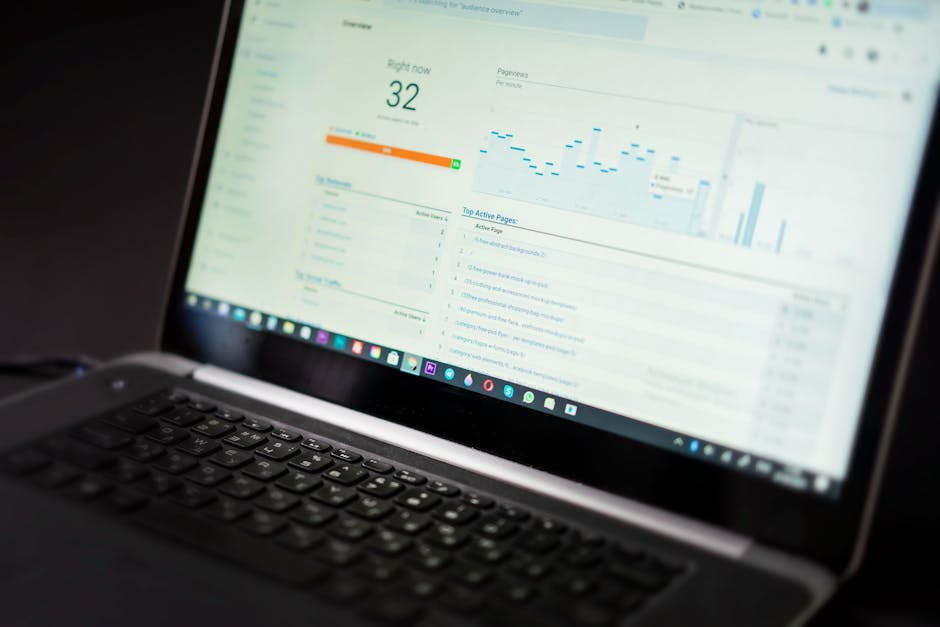
When you shift to automated systems like Reportz, you flip that ratio. Automation isn't just about convenience; it’s about accuracy. Every time a human touches a cell in a spreadsheet, there is a chance for a typo. When I talk about "sanity-checking" data, I’m talking about taking five minutes to verify that the numbers in your dashboard match the raw data in GA4. If you spend your time doing that, you’re an account manager. If you’re spending your time copy-pasting, you’re a data entry clerk.
The Math of Agency Productivity
Let's look at the numbers. If you have 20 clients and you spend 2 hours per client per month on reporting, that’s 40 hours—one full work week—lost to manual labor.
Activity Manual Time (per month) Automated Time (per month) Data Extraction 20 hours 0.5 hours (sanity check) Formatting/Formatting Fixes 10 hours 0 hours Writing Strategic Notes 10 hours 10 hours Total 40 hours 10.5 hoursBy saving those 29.5 hours, you aren’t just "saving time." You are freeing up nearly a full week to actually optimize campaigns, research new keyword opportunities, or—dare I say it—get a better night’s sleep. The ROI of an automated reporting tool like Reportz.io is realized within the first month of reclaiming those hours.
Why Facebook Ads and SEO Need to Live Together
One of the biggest mistakes agencies make is siloing their reporting. You send a "Facebook Ads Report" on Tuesday and an "SEO Report" on Thursday. From the client's perspective, this is fragmented noise.

Your client wants a single source of truth. They want to see how their paid traffic (Facebook) is impacting their organic conversion trends. When you use marketing dashboard widgets to pull both your Facebook Ads data and your organic search data into one view, you allow the client to see the full funnel. Did the Facebook campaign for the new product launch lead to increased branded search volume? You can’t answer that if your data lives in two different PDFs.
Building Your Client KPI Dashboard: The How-To
Getting your Facebook Ads data into a professional dashboard shouldn't require an engineering degree. When looking for a platform like Reportz, you want to ensure it handles the API connection natively so you don’t have to deal with manual CSV exports.
1. Define Your Core KPIs
Before you build, stop. What is the client actually paying you for? If they care about leads, don't show them impressions or reach. Showing irrelevant data is https://highstylife.com/how-do-i-speed-up-reporting-for-12-clients-without-hiring-another-account-manager/ the fastest way to get a client to stop reading your reports. For Facebook Ads, focus on:
- CPA (Cost Per Acquisition) ROAS (Return on Ad Spend) Click-Through Rate (CTR) for ad creative performance Conversion volume
2. The Integration Process
Most modern reporting tools connect to Facebook via a direct API login. You will often be prompted to authenticate your account. Sometimes, these tools require you to handle a reCAPTCHA mentioned on the integration page to ensure the connection is secure. Don't skip these steps—they exist to protect your client’s data privacy.
If you find that a specific metric you need isn't pulling correctly, don't just guess. Most platforms have a support portal or a Facebook group link where their users share integration tips. I’ve seen some of the best custom widget solutions come from users simply asking, "How do I map this specific Facebook conversion event in my dashboard?"
3. White-Labeling and Branding
If you are an agency, your reports should look like *your* agency, not a third-party tool. Reportz.io allows for white-labeling, which means you can strip away the tool's branding and replace it with your own logo, color schemes, and custom domains. This is about professional consistency. When a client sees their own branding combined with your data, it reinforces that you are the expert managing their success, not just a middleman using a random piece of software.
The Pitfalls to Avoid
I’ve seen too many reports that look like a carnival. They’re colorful, they have pie charts for everything, and they answer absolutely nothing. Here are my "Ops Lead" rules for avoiding a junk report:
No Screenshots: If you are still pasting screenshots of Facebook Ads Manager into PowerPoint, stop immediately. It’s unprofessional and the data is static. If a client asks a question about a specific spike in spend, a screenshot cannot be drilled into. No Vague ROI Claims: If you claim "great results," you better have the math to back it up. If you don't know the exact lead-to-close ratio, don't guess. Stick to the metrics you can measure in your client KPI dashboard. Always Contextualize: An automated report is not a replacement for communication. Use the report to provide the "What," but use your email or monthly call to provide the "So what?" and "What’s next?"The Technical Reality of Tools
One thing that drives me crazy is tools that hide their pricing until you speak to a sales rep. You have a budget and an agency to run; you don't have time for a sales demo just to see if a tool is within your price range. Look for transparency. Tools like Reportz.io are clear about their value proposition and their integration capabilities.
When you are evaluating these tools, look specifically for "Multi-Source Integrations." You need to be able to pull from Facebook Ads, Google Ads, GA4, GSC, and maybe even LinkedIn or TikTok Ads. If a tool doesn't offer a wide variety of marketing dashboard widgets, you’ll eventually find yourself needing to patch together two different reporting tools, which defeats the entire purpose of automating your workflow.
Final Thoughts: Your Friday Afternoon Freedom
Look, I know how it feels to be drowning in data. When I transitioned into agency operations, my main goal was to stop the "copy-paste injuries" and the late-night data-scrubbing sessions. By moving to a centralized, automated client KPI dashboard, you aren't just saving yourself time—you are providing a higher level of service.
You’re moving from being an "SEO person" who sends attachments to a "Performance Partner" who uses data to drive business decisions. The metrics are just the language you use to communicate that value. Stop building spreadsheets, stop fixing broken charts, and start focusing on the strategy that actually moves the needle for your clients.
If you're ready to make the switch, take an audit of your current client load this week. Identify which clients require the most manual data entry, and make them your first priority for migration. Once you see the time savings, you’ll never look back at a PowerPoint deck again.
A Quick Checklist for Your Next Audit:
- Verify API Connections: Are all your Facebook Ad accounts linked properly? GA4 Sanity Check: Does your dashboard data match your Google Analytics views for the same period? Remove the Fluff: Delete any widgets that don't directly help the client understand their ROI. Check for Consistency: Is your branding uniform across all client-facing reports?
The transition takes a little bit automated seo reports for wordpress of setup, but the result is a clean, automated, and professional workflow that allows you to scale your agency without having to hire more people just to perform data entry. Stay organized, stay focused on the math, and keep your sanity intact.